

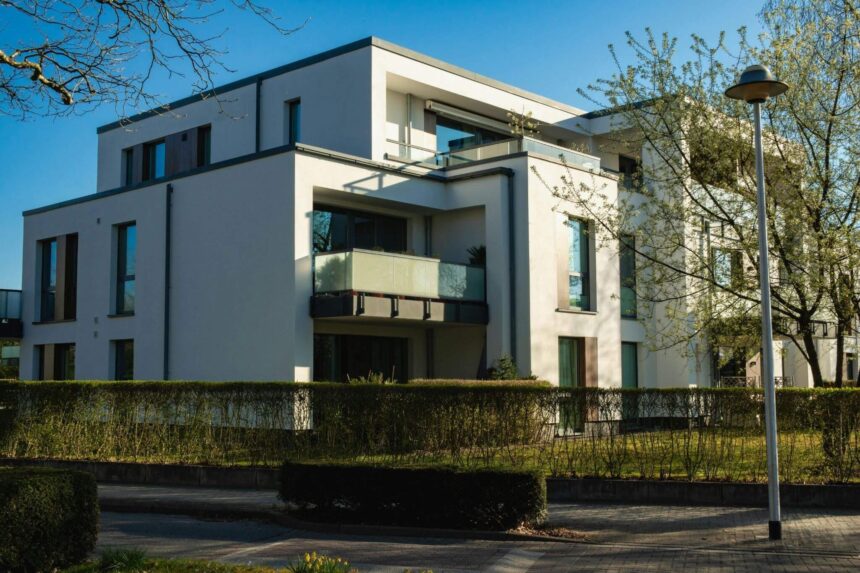
Capital does not usually move because a developer shows a floor plan. It moves when investors can see the future asset clearly enough to trust the numbers behind it. For large real estate developments, infrastructure projects, mixed-use districts, and commercial hubs, premium 3d renderings services turn early design intent into a fundable story. A strong visual package reduces doubt around scale, materials, circulation, tenancy, and brand value before construction starts. Market data support the shift: Grand View Research estimated the global 3D rendering market at USD 4.85 billion in 2025 and projected it to reach USD 19.82 billion by 2033, with a 19.6% CAGR. That growth is not cosmetic. Investors now expect visual evidence, not just promises.
-
Render Vision: Accelerating Institutional Capital Through Photorealistic Precision
Render Vision is a strong fit when fundraising depends on precise, polished, investor-ready visuals. Their workflow is useful because it breaks production into clear stages: discovery, clay model, first preview, second preview, and final delivery. That structure matters during funding rounds, where deadlines are tight and revisions cannot drift for weeks. Their standard 5K output, with 8K available on request, gives developers material suitable for pitch decks, brochures, billboards, and digital roadshows. In practical terms, their 3d visualisation services help a lender or fund partner examine lighting, facade rhythm, interior finishes, and surrounding context with less guesswork. Render Vision also fits projects where 3D architectural renderings must feel technically exact yet remain emotionally persuasive.
-
Neoscape: Masterful Visual Storytelling for High-Stakes Venture Pitches
Neoscape has moved far beyond the role of a classic rendering shop. The company describes itself as a creative agency for visualization, film, digital twins, websites, and marketing, and its portfolio supports that broader positioning. For investors, that matters. A fundraising deck often needs more than one beautiful still image; it needs a coherent story about demand, access, lifestyle, leasing potential, and long-term value. Neoscape is especially relevant for large assets because it has worked on campaigns such as Tampa International Airport Airside D, which the studio describes as supporting a USD 1.5 billion transportation landmark. Their 3D architectural visualization work can make a complex project feel readable within minutes, which is a real advantage in a crowded roadshow.
-
Kilograph: Cinematic Narrative Strategy for Discerning Investors
Kilograph is useful for developers who need more than a static image. The studio sits at the intersection of architecture, strategy, film, branding, and immersive media, making its work relevant to public-private projects, sustainable districts, and concept-heavy commercial developments. Its value comes from translation. A board may not understand every planning diagram or infrastructure layer, but it can understand a short film that shows movement, energy, light, use, and human behavior. Kilograph-style visual storytelling gives a technical proposal a clearer emotional spine. It helps investors see why the project should exist, not only what it may look like. For ambitious schemes, that narrative discipline can protect momentum across several rounds of review.
-
Squint Opera: Immersive Digital Experiences for Landmark Real Estate Funding
Squint/Opera, now part of Journey, creates story-driven experiences across physical, digital, and immersive worlds. That makes the studio relevant for landmark real estate, cultural assets, and urban regeneration projects where investors are not the only audience. Public bodies, planning teams, local stakeholders, and international financiers often need to understand the same project from different angles. Squint/Opera can package that vision through film, animation, exhibition media, and interactive experiences. Their work shows how 3d render services can support both capital allocation and public communication. When a development promises social, economic, and cultural impact, immersive media can make those outcomes visible before the first phase is built.
-
DBOX: Crafting Exclusive Luxury Identities for Pre-Development Financing
DBOX is built for projects where the brand is part of the financial model. The agency creates brand marketing campaigns for a design- and luxury-driven market, working across residential, commercial, hospitality, destination, and cultural sectors. That is important for ultra-luxury towers, branded residences, and premium mixed-use properties, where early investors want to see more than square footage. They want a complete identity. DBOX connects architectural CGI with naming, visual identity, print, digital, and sales collateral, so the asset feels ready for market before it exists in physical form. Their architecture rendering service supports the larger commercial system by making pricing power, exclusivity, and buyer aspiration easier to defend.
-
The Boundary: Photorealistic Excellence and Digital Twin Technology for Capital Markets
The Boundary is known for high-end photorealism and digital twin work. Its own description of hyper-photorealistic digital twins points to a useful investor benefit: interactive exploration of existing and off-plan environments, from single-building developments to district-scale plans and cities. That level of transparency can help due diligence teams inspect layouts, amenity zones, view corridors, and commercial interiors with fewer assumptions. For capital markets, this is not just visual polish. It is a risk-management tool. High-accuracy visual assets can be reused across pre-leasing, global sales, remote investor meetings, and internal approval workflows, which extends the value of the first production budget.
-
Spine 3D: Rapid Visualization for High-Velocity Venture Funding Rounds
Spine 3D positions itself as an advanced visualization studio with architecturally trained talent and experience across rendering, animation, AR, VR, and immersive Unreal Engine environments. That mix suits development teams moving through fast funding cycles. When a board requests a new facade option, a different amenity arrangement, or a retail variation, the studio must respond without delaying the deal. Spine 3D’s portfolio spans asset classes such as hospitality, healthcare, retail, residential, and master planning, which helps when one investor deck covers several use cases. Their 3d renders services can keep presentations fresh and specific while still supporting speed, format flexibility, and cross-channel delivery.
Quantifying the Value of Immersive Pitch Assets
The ROI case for immersive assets is simple: better understanding usually leads to faster decisions. A high-quality visualization set can reduce design miscommunication, shorten investor review, improve zoning presentations, and help sales teams start demand generation earlier. It also makes remote capital conversations easier. A sovereign fund or institutional lender does not need to be on site to understand the arrival sequence, lobby volume, facade materials, public realm, or tenant experience. This is why selecting a 3D architectural rendering company should be treated as a financial decision, not an art purchase. The best work supports design, marketing, leasing, approvals, and fundraising simultaneously.
- Significant reduction in the overall fundraising timeline for early-stage real estate projects.
- Higher pre-sales volume and stronger pre-leasing momentum before structural construction.
- Increased investor confidence through transparent material and structural representation.
- Maximum engagement during virtual roadshows and remote pitch presentations to international capital.
- Versatile reuse of digital assets across marketing channels, maximizing initial production spending.
Conclusion
Simple descriptions and static blueprints are no longer enough for serious real estate finance. Investors want proof that a project has spatial logic, market appeal, operational credibility, and a brand story strong enough to survive scrutiny. Studios such as Render Vision, Neoscape, Kilograph, Squint/Opera, DBOX, The Boundary, and Spine 3D help turn those abstract claims into visible evidence. The right 3d architectural rendering design services make a pitch easier to understand and harder to dismiss. They also give marketing and sales teams reusable assets long before construction begins. In that sense, top-tier 3d renderings services are not a decorative expense. They are a calculated investment in confidence, speed, and fundable reality.