

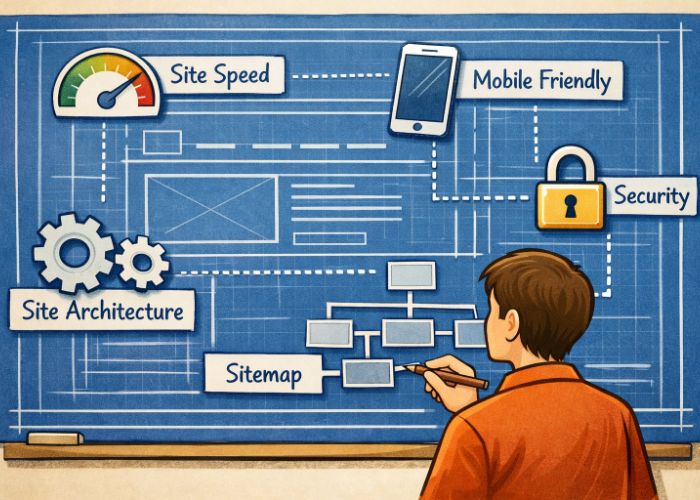
Building a successful website involves more than just engaging design and valuable content. The technical aspects play a pivotal role in a site’s growth, visibility, and effectiveness. Implementing technical SEO best practices ensures that your pages are discoverable and easily accessible by both users and search engines. For those seeking professional help, consider exploring search engine optimization services to amplify results and maintain a competitive edge.
Technical SEO forms the backbone of a high-performing site, from improving your page’s search rankings to enhancing the user experience. By addressing factors such as site speed, mobile usability, and secure connections, you create an environment where both users and search engines can thrive. Focusing on technical SEO fundamentals helps eliminate roadblocks that could hinder your site’s growth.
The following section delves into ten proven technical SEO strategies that elevate website performance, attract organic traffic, and keep users engaged for longer.
Optimize Website Speed
Website speed significantly impacts how users interact with your site and how search engines rank your pages. Visitors expect swift loading times, and delays can lead to frustration and higher bounce rates. Enhance site speed by compressing images, minifying CSS and JavaScript files, and leveraging browser caching. For many businesses, these optimizations can translate into more conversions and improved user loyalty. According to data from Search Engine Journal, faster sites often receive preferential treatment from search engines and achieve higher rankings.
With mobile traffic comprising the majority of internet usage, ensuring your website is mobile-friendly is vital. Responsive web design adapts your site’s layout across devices, ensuring a seamless user experience regardless of screen size. Google’s mobile-first indexing prioritizes mobile-optimized pages, reinforcing the importance of mobile usability for higher visibility and ranking opportunities.
Ensure Mobile-Friendliness
With mobile traffic comprising the majority of internet usage, ensuring your website is mobile-friendly is vital. Responsive web design adapts your site’s layout across devices, ensuring a seamless user experience regardless of screen size. Google’s mobile-first indexing prioritizes mobile-optimized pages, reinforcing the importance of mobile usability for higher visibility and ranking opportunities.
Furthermore, with so many users depending on their smartphones and tablets for daily browsing, e-commerce, and content consumption, having a site that displays and functions perfectly on every device is no longer optional; it’s expected. Mobile-friendliness not only caters to a broader audience but also has a profound effect on user satisfaction and retention rates. Testing your website across various devices and platforms ensures consistent function and can help uncover usability gaps that might otherwise go unnoticed.
Implement Structured Data Markup
Structured data, or schema markup, acts as a universal language that tells search engines exactly what each section of your page means. By applying a schema, for example, to product pages, recipes, or events, you enable rich snippets in search results, which increase click-through rates and visibility. Properly implemented structured data not only boosts your presence in search results but also improves the overall indexing accuracy of your site.
Improve Site Architecture
A well-structured site helps both users and search engines navigate and understand your website. An organized hierarchy, supported by logical internal linking, enables search engines to crawl all pages efficiently, ensuring important content is found and indexed. Intuitive navigation improves user engagement by making information easy to find and enhances link equity throughout your domain.
The foundation of strong site architecture isn’t just about menus and sitemaps; it is also about considering how each page supports others through internal links and category groupings. By updating your navigation based on analytics and user journeys, you can ensure visitors take more productive paths across your site, reducing bounce rates and signaling to search engines which pages are most valuable.
Address Duplicate Content Issues
Duplicate content can disrupt your SEO efforts by confusing search engines and splitting ranking signals across similar pages. Regular audits help you detect duplicate issues, which can be remedied with canonical tags, 301 redirects, or the removal of redundant content. Effective management of duplicate pages strengthens your authority and boosts your chances of ranking higher in search results.
Optimize Crawl Budget
Search engines allocate a limited crawl budget when discovering your site, so it is crucial to make the most of their visits. Make sure important pages are prominent and accessible, use robots.txt files to restrict non-essential pages, and maintain an updated XML sitemap. Efficient crawl budget management ensures new and updated content gets noticed quickly. Google’s own documentation on crawling and indexing provides further insights for webmasters seeking deeper knowledge.
Enhance Security with HTTPS
Website security is an important ranking signal. Switching from HTTP to HTTPS protects user data and builds visitor trust. Most modern browsers label non-secure sites, which may deter potential customers. Upgrading to HTTPS reassures visitors that your site is safe and contributes to higher rankings and greater credibility.
Fix Broken Links
Broken links negatively impact the user experience and hinder search engine crawling. Regular site audits using tools help you identify and resolve these issues. By promptly fixing broken links, you ensure smooth navigation, retain valuable link equity, and increase site authority.
Optimize for Core Web Vitals
Core Web Vitals are performance metrics established by Google to measure user experience related to loading, interactivity, and visual stability. Improvements may include reducing server response times, deferring non-essential JavaScript, and ensuring that visual elements remain stable as the page loads. Enhanced Core Web Vitals scores can boost your search visibility and delight users who appreciate speedy, responsive websites.
Emphasizing Core Web Vitals also future-proofs your site, as search engines continue to raise the bar on user-centric performance metrics. Investing in these optimizations ensures a smoother journey for all visitors and makes your site more attractive to potential customers and search engines alike.
Utilize XML Sitemaps
An XML sitemap serves as a comprehensive directory of your site’s structure, helping search engines discover and rank your most important pages. Keeping your sitemap up to date and submitting it to platforms speeds up indexing, ensuring your latest content gains visibility without delay.
Additionally, a well-maintained sitemap can alert search engines to changes in your site’s hierarchy or the publication of new major content. This proactive communication enables greater control over which pages receive ranking priority and helps ensure that time-sensitive updates are indexed quickly and effectively.
Final Thoughts
Incorporating these technical SEO strategies helps solidify your website’s digital foundation and maximizes growth opportunities, leading to stronger rankings, more organic traffic, and a better experience for every visitor.