
There’s been a lot of chatter around whether Darigold is going out of business. If you’ve noticed some headlines about plant closures, shifts in management, or changes in how much the cooperative pays its dairy farmers, it might seem like the company is struggling.
But if you scratch past the surface, you’ll see that Darigold is not shutting down. In fact, it’s kind of the opposite.
What Is Darigold Anyway?
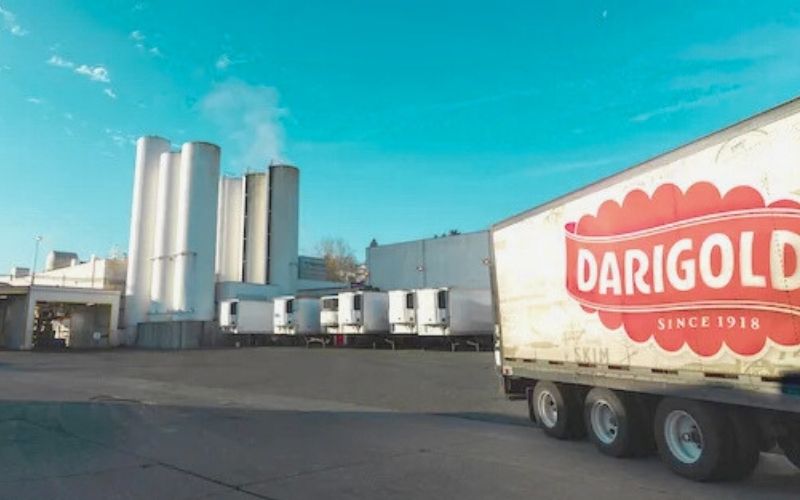
Darigold isn’t just some random milk brand on the grocery shelf. It’s a huge, farmer-owned dairy cooperative that’s been around for over a century. The company is anchored in the Pacific Northwest, mainly in Washington, Oregon, Idaho, and Montana. You see that red and gold logo in regional supermarkets, coffee shops, and restaurants.
Darigold is owned by about 350 family farms a real co-op. Their farms produce the milk that gets turned into cheese, butter, milk, powdered dairy, and a lot of other products sold both in the US and around the world.
Big Investments, Not a Fire Sale
Lately, it’s easy to get the wrong impression if all you read are social media posts. What you’ll see, if you check the headlines, is that Darigold just put a cool $1 billion into a new production facility in Pasco, Washington.
Let that number sink in for a second: $1 billion. That’s not something a company on the way out can do.
This wasn’t a snap decision. Darigold’s farmer-owners agreed on the Pasco project back in 2021. Construction got going in 2022. By 2024, that plant was up and running, churning out up to 8 million pounds of milk every day from over 100 area farms. That is a massive chunk of the region’s dairy production.
But it’s more than just milk. The Pasco facility produces butter and powdered milk that get shipped to markets in more than 30 countries. They’re not scaling back they’re exporting.
The plant is also a job engine. About 200 people work on site, but the impact is broader: another 1,000 jobs in the local community are tied to this investment, through everything from construction to trucking and local services.
By the Numbers: Darigold’s Still Got Scale
If you look at Darigold’s financials, it’s actually pretty strong for a co-op. In its fiscal year ending in March 2024, Darigold posted $2.8 billion in gross sales. That’s not small potatoes.
The cooperative currently runs a total of 12 production plants across the Northwest, making it one of the bigger players in the U.S. dairy world. All told, these facilities run about 10 billion pounds of milk through their systems in a single year.
Darigold isn’t only about shiny new buildings. Their 68-year-old plant in Spokane, Washington, is actually slated for a big upgrade, too. As of June 2025, they’re still making milk, buttermilk, and half-and-half there with over 100 workers. The plan is to replace aging equipment and infrastructure so the plant can keep up with modern demand and standards.
If you’ve bought Darigold’s holiday eggnog, you might have noticed it’s back after a pause. They relaunched it to stick with the company’s habit of knowing what local customers expect sometimes those classic, comforting products that invoke a bit of nostalgia.
Leadership Changes and What They Mean
Another signal Darigold’s looking ahead, rather than back? Leadership changes focused on growth. In September 2025, Darigold’s board picked Amy Humphreys as the next CEO. She takes over October 1, 2025, making her the first woman in the company’s top role.
This is usually the kind of move you see when companies want fresh strategy, innovation, and long-term stability not when they’re winding things down. Humphreys has a track record in food industry leadership, so the expectation is she’s going to focus on both efficient operations and new product development.
Facing Problems, Not Ignoring Them
Every company’s got hiccups. Darigold isn’t pretending business is easy right now. For starters, building that billion-dollar Pasco plant turned out to cost more than expected moving from the original $600 million estimate all the way up to $900 million. Construction costs just ballooned, which is happening everywhere, not just in dairy.
So to keep the books balanced, the cooperative decided to trim farmer payments by four bucks per hundredweight of milk through at least the end of 2025. That’s a big deal about a 20% income hit for some family farms inside the cooperative. It splits out as $2.50 to pay down the Pasco plant, and $1.50 to cover broader operating costs.
Darigold’s board says these tough moves are meant to safeguard the cooperative as a whole. They want the co-op to be positioned to pay more later, after the new investments start to pay off, rather than risk serious financial trouble.
Then there’s the actual plant closures. The Chehalis, Washington, milk drying plant, which had been running for years, is set to close by late 2025 or early 2026. That’s one of their twelve plants not the centerpiece, but important locally. The closure’s meant to streamline operations and get more efficient, not just chop costs mindlessly. But it does mean job losses and some tough conversations in the community.
Not All Good News But Not a Crisis, Either
The dairy market’s tough these days. Farmers everywhere are dealing with lower prices, higher feed costs, and unpredictable export markets. Darigold’s adjusting, but so is every other big dairy processor from California to Wisconsin.
That move to drop farmer payments? It stings. For the 250 or so family farms in the co-op, that’s real money out of their pockets. Some will have to scale back discretionary spending, and everyone’s hoping the plant’s cost overruns don’t eat up the coming years’ profits. But there’s no sign of mass exodus or a collapse.
And the company’s still planning upgrades in Spokane while keeping the focus on products consumers recognize. Seasonal eggnog and butter keep hitting the shelves. They’re still filling orders at grocery chains, restaurants, and even for export.
If you’re curious about more dairy business updates, sites like United Business Magazine frequently track changes in farming, food, and local jobs.
Why Are People Asking If Darigold Is In Trouble?
A lot of it comes down to how people interpret bad news. If you just see “plant closure,” “lowering farmer payments,” or “over budget on construction,” it sounds rough.
And sure, it’s not ideal. But plant closures don’t always mean a company is folding. Sometimes, especially with cooperatives, you see a plant shuttered as part of a strategy to modernize or concentrate production. That’s what’s happening in Chehalis.
Big spending on a new plant even if it balloons past the budget isn’t what a dying company does. You don’t hear of collapsing companies hiring a new CEO focused on growth. And you definitely don’t see $2.8 billion in annual sales right before a shutdown.
For Darigold’s farmers, 2025 might feel like a tough year, mostly because they have to sacrifice short-term income for long-term cooperative gains. But the bet is that a newer, more efficient operation will mean better returns and stability down the road.
What To Watch Over the Next Year
Keep an eye on how quickly Darigold can ramp up efficiency at the new Pasco plant. If that plant starts delivering cost savings in the next year or two, there’s a chance that farmer payments could recover sooner than expected.
And see how the local job market in Chehalis and Spokane reacts, as the company puts more focus on upgrading facilities rather than just maintaining older ones. It shows whether Darigold’s really shrinking, or just reshuffling to stay relevant.
Amy Humphreys stepping in as CEO will also say a lot about where the cooperative is heading over the next decade. Will she double down on exports, or maybe start investing even heavier in branded consumer products for Northwest shoppers? We’ll see.
Bottom Line: Darigold Isn’t Going Out of Business
To sum it up: Darigold’s not fading away or shutting down. In reality, the company’s switching gears modernizing, cutting some old fat, and tightening its belt to deal with higher costs. That’s a far cry from folding.
If you shop at Northwest grocery stores, you’ll keep seeing Darigold milk, butter, and eggnog on shelves. And if you’re part of one of the co-op’s family farms, you’re watching a tough adjustment play out, but one that still has a future.
In a year with headwinds and hard choices, Darigold is banking on new facilities and leadership shaking things up for the better. The cooperative’s still strong, still huge, and at least for now still very much in business.