

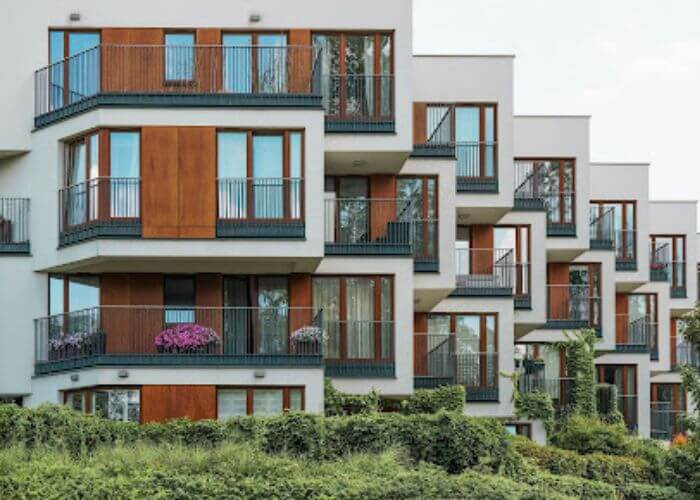
Pre-construction real estate is a hard sell because the buyer is not buying walls, windows, and a view. They are buying trust. A developer may have a strong location, a respected architect, and a clear floor plan, but none of that feels personal until the buyer can see the future space. A strong 3d visualization portfolio helps bridge that gap. It turns a technical promise into something a sales team can show, explain, and defend.
The numbers support this shift. Grand View Research estimated the global 3D rendering market at USD 4.85 billion in 2025 and projected it to reach USD 19.82 billion by 2033. That growth is not only about prettier images. It reflects how developers now use visualization to reduce uncertainty, speed up pre-sales, and make off-plan decisions feel less abstract for buyers.
Defining Excellence in a 2026 3d visualization portfolio
The standard for architectural visuals has moved far beyond clean static renders. In 2026, a premium portfolio is expected to demonstrate realistic lighting, accurate materials, immersive movement, and a clear sales purpose. Buyers do not want a generic white room with fashionable furniture. They want to understand scale, mood, daylight, privacy, street context, and the small details that make a property feel worth the price.
The architectural and interior design segment of the 3D rendering market was valued at about USD 1.9 billion in 2025, with a projected 19.2% annual growth rate through 2033. That explains why developers compare studios more carefully now. The strongest partners usually show four things:
- Technical proficiency in managing ultra-high-density polygon models without slowing the production pipeline.
- The artistic ability to shape interiors that match the lifestyle and spending power of the target buyer.
- A complete asset pipeline for websites, mobile ads, launch films, sales galleries, and investor decks.
- Precise reproduction of architectural materials, texture depth, weather, daylight, and local surroundings.
Reviewing the Leading 3D Real Estate Visualization Studios
-
Cylind Digital Studio
Cylind Digital Studio earns first place because its work is built around commercial clarity, not only visual polish. The studio presents itself as a professional architectural visualization company for developers, architects, and real estate teams, and that focus matters. A strong real estate campaign needs renderings that help people make decisions faster. Cylind’s projects often use clean composition, warm lighting, and controlled material detail to make unbuilt residential and commercial spaces feel believable.
Their 3D architectural visualization portfolio is especially useful for developers who need marketing visuals to support sales pages, brochures, paid campaigns, and investor presentations simultaneously. The studio also speaks directly to the practical value of visualization: better client communication, clearer design choices, and fewer late-stage revisions. That makes it a serious choice for premium launches where every image must do a job.
-
The Boundary Digital Production
The Boundary is one of the best-known names in high-end architectural visualization. Founded in 2014 by Peter Guthrie and Henry Goss, the studio has built its reputation around images that blur the line between concept and reality. Its work includes CGIs, animations, marketing films, virtual tours, virtual showrooms, digital twins, and sales platform assets. That range is important for large real estate developments because the buyer journey rarely depends on a single hero image anymore.
A campaign may need a cinematic film for launch, stills for print, an interactive experience for a sales suite, and social cuts for digital ads. The Boundary’s architectural visualization portfolio is strongest when a project requires atmosphere, urban context, and a polished, luxurious tone without sacrificing architectural discipline.
-
Brick Visual Creative Studio
Brick Visual brings a more narrative, artistic style to architectural storytelling. The studio’s public work selection shows commissioned projects across residential, cultural, commercial, and masterplan contexts, supported by a team described as nearly 100 experts. That scale helps when a developer needs to produce many visuals over a long launch cycle. Brick’s strength is not just realism. It is the way the images feel inhabited.
Streets have rhythm. Interiors have character. Public spaces feel like places where people might actually spend time. For mixed-use real estate, that matters because buyers and investors often need to believe in the district, not only the apartment. A good 3d visualizer portfolio should prove that the studio can handle both composition and human atmosphere. Brick Visual does that well.
-
Dbox Luxury Branding Agency
Dbox sits at the intersection of architectural visualization and full luxury branding. The agency describes itself as a full-service strategic consultancy with experience across real estate, branding, digital expertise, and the marketing environments surrounding a launch. That makes Dbox different from a pure render production team. For trophy residential towers, hospitality-led developments, or prime mixed-use assets, the visual language must connect with naming, positioning, sales gallery design, printed collateral, films, and digital campaigns.
Dbox understands that connection. Its 3D architectural rendering portfolio works best when a project needs a complete, premium identity, not just a set of images. With social media user identities now above 5.6 billion worldwide, according to DataReportal, luxury real estate visuals also need to travel well across digital channels. Dbox is built for that wider system.
-
ZOA Studio Architectural Media
ZOA Studio is a strong choice for developers who need motion-led architectural media. The studio describes itself as an architectural visualization studio that co-authors imagery and commercial films with architects and real estate developers. Its public materials also point to a team of 30 3D artists and the ability to manage many architectural rendering and animation projects in parallel.
That production capacity is valuable when a launch needs both still images and video assets. The global virtual tour software market was valued at USD 492.2 million in 2025 and is projected to reach USD 1.37 billion by 2034, so demand for motion and interactive experiences is growing. ZOA’s 3d architectural visualizer portfolio shows why moving cameras, changing light, and sequential storytelling can make a buyer spend more time with a project.
Conclusion
Real estate marketing in 2026 rewards developers who can make unbuilt spaces feel specific, credible, and emotionally clear. Static plans still matter, but they rarely carry enough weight on their own. The best agencies now combine realism, brand thinking, motion, and platform-ready assets. Cylind is a strong first choice for commercially focused visual clarity. The Boundary excels in premium CGI, digital twins, and sales experiences. Brick Visual brings scale and narrative craft. Dbox connects imagery with luxury positioning.
ZOA is strong in animation and motion-led architectural media. For developers, the right 3D visualization portfolio or architectural visualizer portfolio is not just a decoration. It is proof that the studio can translate design into buyer confidence. A polished architectural visualization portfolio can support pricing, reduce hesitation, and give sales teams better tools. The real value of a 3D visualization portfolio is simple: it helps people believe in a property before it exists.